Specialty Finishes · Naples, FL
Venetian Plaster in Naples, FL
Hand-troweled, burnished lime plaster with the depth and glow of polished stone, applied by artisans for Naples’ finest homes.
Schedule an EstimateCall (239) 375-8737Polished Plaster with Real Depth
Venetian plaster in Naples homes brings something paint simply cannot: a wall that looks carved from stone and seems to glow from within. True Venetian plaster, or stucco veneziano, is made from slaked lime putty and finely ground marble. It is applied in multiple tissue-thin coats with a steel trowel, then compressed and burnished until the surface takes on a cool, smooth, polished sheen. Because every layer is slightly translucent, light passes into the finish and bounces back with a soft, cloudy movement that changes through the day.
The look can be quiet and creamy in a Port Royal great room or dramatic and lacquer-like in a deep slate dining room. Sheen ranges from a soft satin marmorino to a high-gloss polish, and the color is tinted into the plaster itself rather than painted on top. The result is a wall with genuine depth, subtle tonal variation, and a hand-made character that reads as luxurious without shouting.
Lime plaster is also well suited to Southwest Florida interiors. It is a breathable mineral finish, and its naturally high alkalinity resists mold and mildew. In an air-conditioned home it holds its color and polish for decades, and a protective wax or sealer can be added for extra stain resistance in busy areas.
Where It Works Best
Great Room Feature Walls
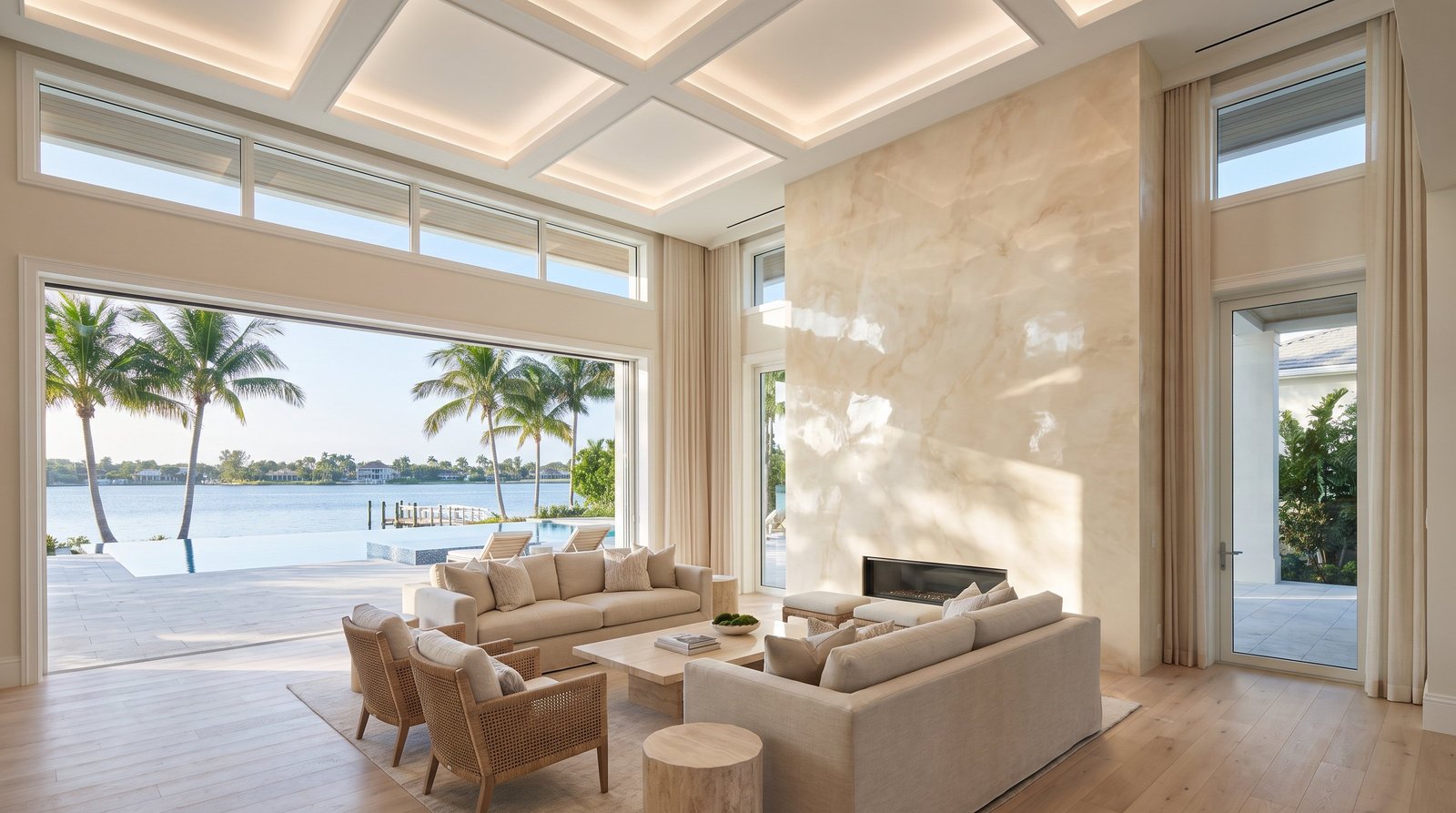
A single tall plaster wall, often around a fireplace or behind a media wall, anchors a double-height room and catches the light from Gulf-facing glass.
Formal Dining Rooms
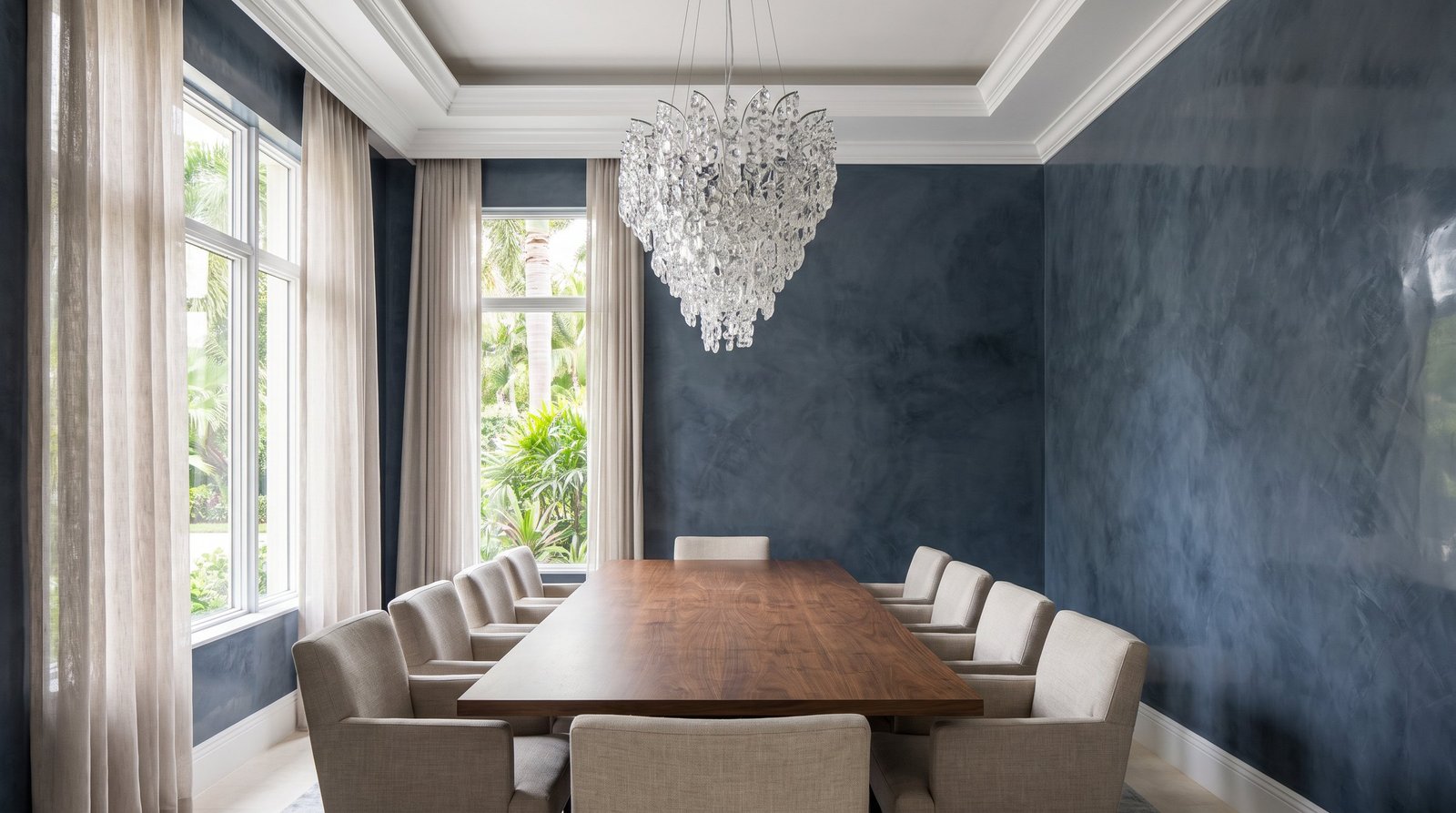
Deep, saturated tones in a high polish create an intimate, jewel-box effect under a chandelier and reflect candlelight beautifully.
Powder Rooms
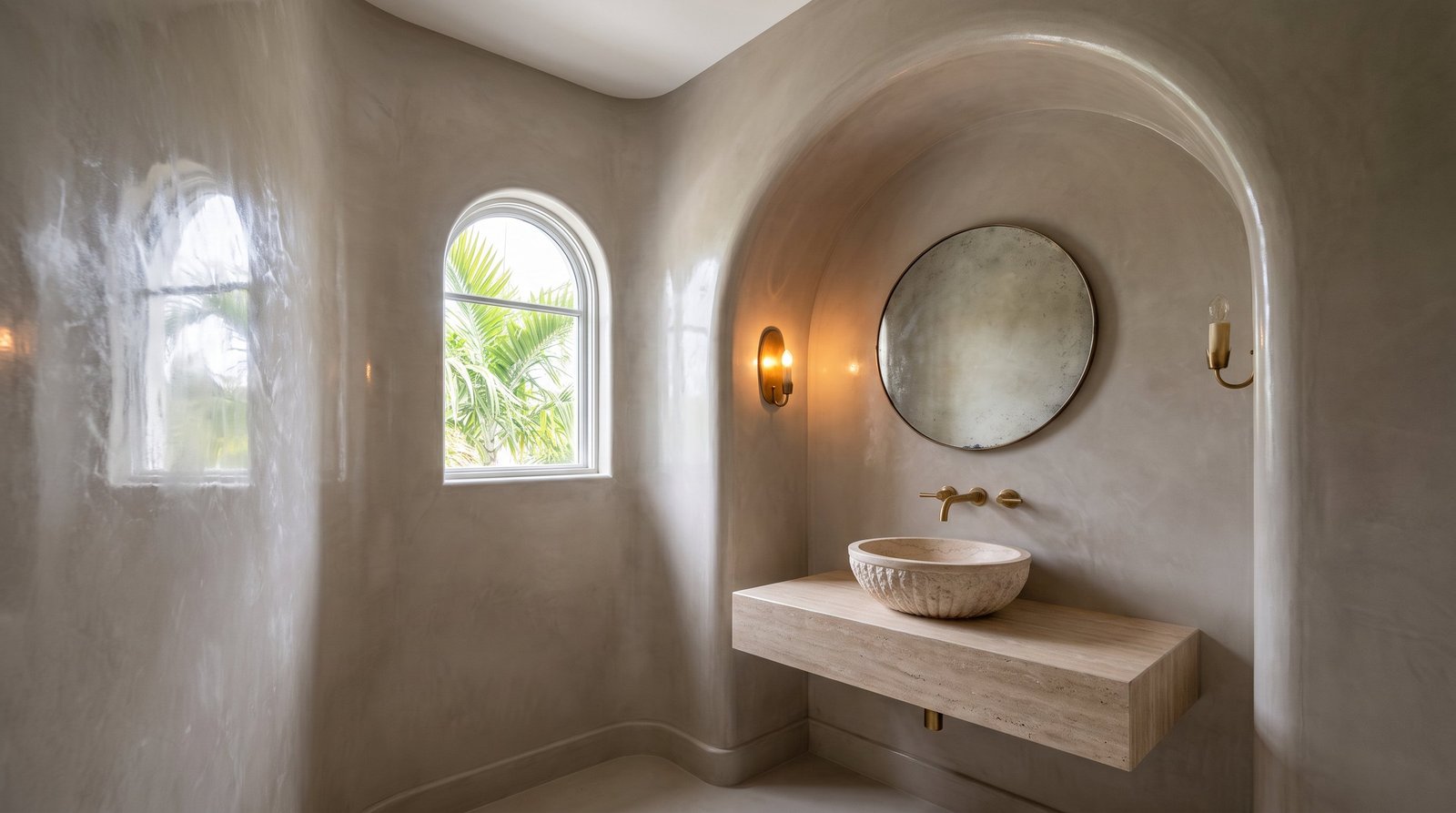
Small rooms are where polished plaster shines. Curved walls, arched niches and vanity alcoves wrap seamlessly with no joints or seams.
Entries & Stair Halls
Foyers and gallery halls benefit from a durable, elegant surface that makes a strong first impression and stands up to daily traffic.
Primary Suites
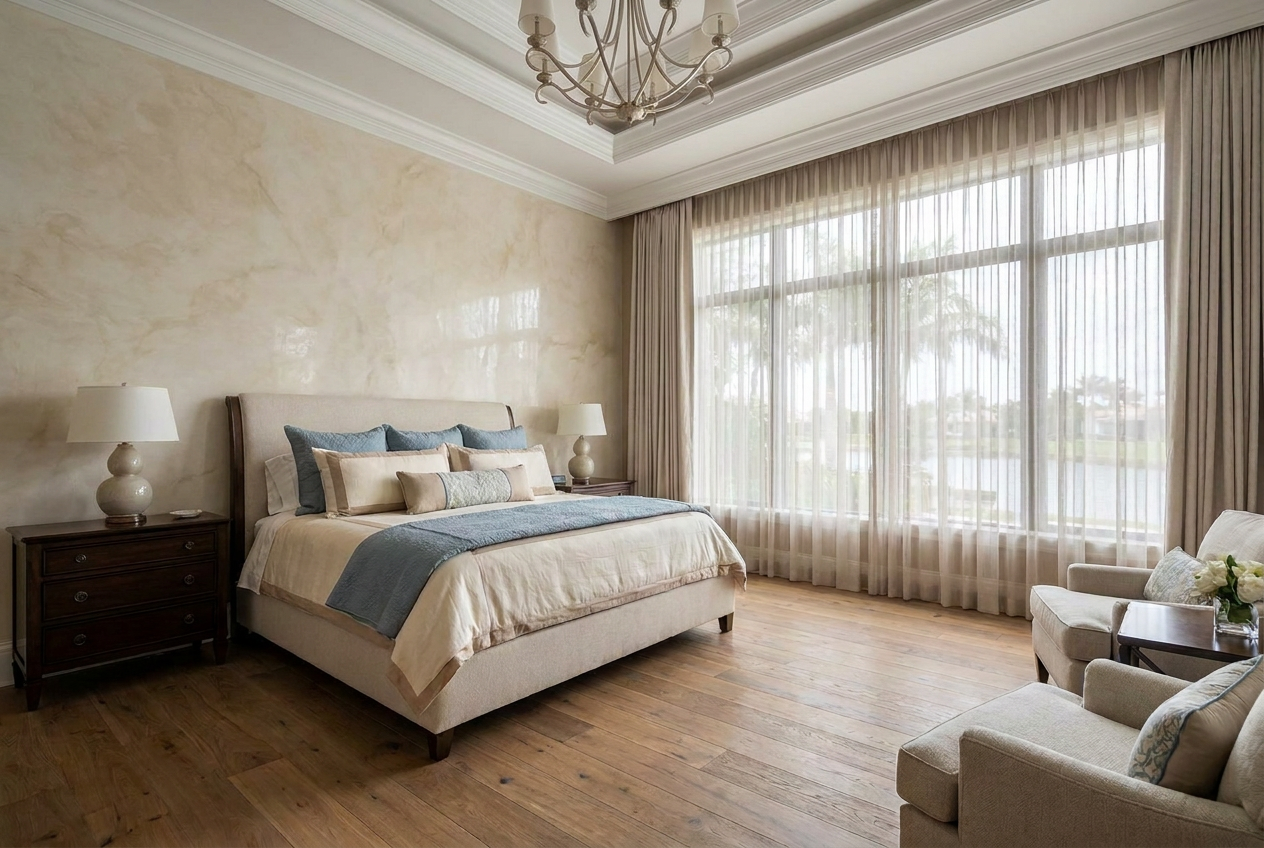
A soft marmorino behind the bed or in a sitting area adds calm texture that photographs and lives beautifully.
Ceilings & Columns
Barrel vaults, domes, tray ceilings and round columns can all be finished in plaster for a cohesive, architectural look.
Our Process
- Consultation and samples. We review the room, light and furnishings, then prepare sample boards so you can choose color, sheen and movement in your own space.
- Surface preparation. Floors, trim and furnishings are fully protected. Walls are repaired, made flat and primed with a bonding primer so the plaster adheres and cures evenly.
- Base coats. Thin coats of tinted lime plaster are troweled on and allowed to set, building the foundation of color and depth.
- Finish coats and burnishing. Final tight coats are applied and compressed with a steel trowel until the surface polishes to the agreed sheen.
- Protection and walkthrough. Where appropriate we apply a wax or sealer, clean up completely, and walk the finished room with you.
Choosing Your Finish
Venetian plaster is a family of finishes rather than a single look. During the sample stage we help you choose the one that suits the room.
High-Polish Venetian
The classic stucco veneziano: tight, glass-smooth and reflective, with marble-like veining. Best for dining rooms, powder rooms and feature walls.
Marmorino
A slightly coarser marble plaster with a soft satin or matte sheen and gentle texture. Calm and organic, ideal for bedrooms and living areas.
Low-Sheen Polished
A middle ground with visible movement but less shine, often chosen for large great-room walls where high gloss would feel too strong.
Tone-on-Tone Movement
Two close shades layered together for subtle cloudy depth that reads as a single color from across the room.
For a chalkier, more rustic matte look, compare our limewash and Roman clay finishes. For bolder texture, see textured plaster walls and faux finishes.
Venetian Plaster vs. Paint
Paint is a film that sits on the surface of the wall. Venetian plaster is a mineral layer that becomes the surface. That difference shows in a few ways:
- Depth. Light travels into the translucent plaster layers, so color looks richer and changes through the day. Paint looks the same from every angle.
- Durability. Cured lime plaster is hard and stone-like. It does not peel the way paint can.
- Repairs. Small damage can be patched and blended by hand, while paint touch-ups often show.
- Character. Each wall is hand-troweled, so no two are exactly alike.
Paint is still the right choice for most walls in a home. Venetian plaster is best used where you want a statement: the wall people see first, the room you entertain in, or a small space you want to feel special. For whole-house color, see our interior painting and accent walls pages.
Color and Naples Light
Naples homes get strong, bright light, especially in rooms facing the Gulf, a bay or a pool. That light is what brings polished plaster to life, but it also changes how color reads. A high-polish finish on a sunlit wall will show more reflection and movement than the same plaster in a shaded hallway.
That is why we make sample boards in your actual colors and sheens and look at them in the room, morning and evening. Warm ivories, soft greiges and pale stone tones suit bright coastal rooms. Deep blues, charcoals, greens and terracottas are stunning in dining rooms, libraries and powder rooms, where lower light lets the polish glow.
Planning and Timing
Venetian plaster in Naples is an interior finish, so it can be applied year-round in an air-conditioned home. Each coat needs time to set before the next, and the final burnish needs a fully cured surface, so a single feature wall still usually takes several days. Larger rooms and ceilings take longer.
Plaster is best done after messy construction is finished and before final furniture and artwork go in. If you are remodeling, we coordinate with your other trades. Seasonal residents often schedule plaster work while they are away, with access arranged through a property manager or community gate.
What Affects the Cost
Every plaster project starts with a consultation and a written, itemized estimate. The main factors are:
- Square footage and the number of walls or rooms.
- Finish type. A high polish takes more coats and burnishing than a matte marmorino.
- Wall condition. Uneven or damaged walls need more prep to get a flat base.
- Shape. Curves, arches, niches, columns and ceilings take more handwork and staging.
- Height. Double-height great rooms need scaffolding.
- Protective topcoat. Wax or sealer adds a step but improves stain resistance.
Mistakes to Avoid
Venetian plaster rewards skill and punishes shortcuts. The most common problems we see are plaster applied over walls that were not made flat, which shows every bump once polished; finishes rushed between coats, which leads to cracking or uneven sheen; synthetic “Venetian-look” products that lack the depth of real lime; and plaster used in places that stay wet, such as inside showers. Choosing an experienced applicator and approving samples in your own room avoids most of these.
House Painter Naples FL by Cutting Edge is owner-led and a Nine-Time Best of Houzz company, serving homes from Port Royal, Pelican Bay and Olde Naples to Quail West, Mediterra and Marco Island. Schedule a consultation or call (239) 375-8737.
Pelican Bay Home: Dining Room
Flat, scuffed builder-beige walls transformed into a deep blue-gray polished Venetian plaster with soft marble-like movement and a burnished glow.
 Before
 After
Venetian Plaster FAQ
How does Venetian plaster hold up in Florida humidity?
Very well indoors. Lime plaster is breathable and naturally mold resistant, and in a climate-controlled Naples home it stays stable for many years. It is not intended for areas that are constantly wet, such as shower walls; for those we recommend tadelakt or microcement.
Can it be cleaned?
Yes. A waxed or sealed finish can be wiped with a soft damp cloth and mild soap. Avoid abrasive pads and harsh chemical cleaners, which can dull the polish.
What if it gets scratched or chipped?
One of the advantages of a hand-applied plaster is that small areas can be repaired and blended by an experienced applicator, rather than repainting an entire wall.
Can I choose any color?
Plaster is tinted with mineral pigments, so we can match most palettes, from warm ivories and greiges to deep blues, charcoals and greens. Final color is confirmed on samples before work begins.
How long does a Venetian plaster wall take?
A single feature wall usually takes several days because each coat must set before the next and the final burnish needs a cured surface. Larger rooms take longer; your estimate includes a schedule.
Can Venetian plaster go over my existing walls?
Usually, yes. Existing drywall or plaster is repaired, made flat and primed with a bonding primer before the plaster goes on.
Is it messy or noisy to install?
No more than a careful paint job. The room is fully protected, and troweling is quiet handwork.
Can it be used outdoors or on a lanai?
Polished Venetian plaster is best kept indoors in climate-controlled rooms. For covered outdoor spaces we can recommend more suitable finishes.
Can I see samples before committing?
Yes. We prepare sample boards in your chosen colors and sheens so you can view them in your own light.
Pelican Bay Home: Primary Suite
A scuffed, patchy tan wall behind the bed refinished in a soft ivory marmorino with gentle hand-troweled movement and a satin glow.
 Before
 After
Get a Venetian Plaster Estimate
Naples office: 3003 Tamiami Trl N, Suite 317, Naples FL 34103
Schedule an EstimateCall (239) 375-8737Also see: Roman Clay & Tadelakt · Metallic Paint & Gold Leaf · Textured & Plaster Walls