
Exterior · Naples, FL
Pool Cage Painting in Naples, FL
Restore faded, chalky or oxidized aluminum screen enclosures for a fraction of the cost of replacing them.
Schedule an EstimateCall (239) 375-8737Bring Your Enclosure Back to Life
Pool cages are everywhere in Naples, and nearly all are aluminum frames with a baked-on factory finish. Sun, rain, pool chemicals and salt air break that finish down into faded color, a chalky film that rubs off on your hands, spotting and sometimes corrosion. A new enclosure is a major expense; painting the existing frame restores the look for much less.
We clean, prep and coat aluminum pool cages and screen enclosures with coatings formulated to bond to aluminum and resist UV fading.
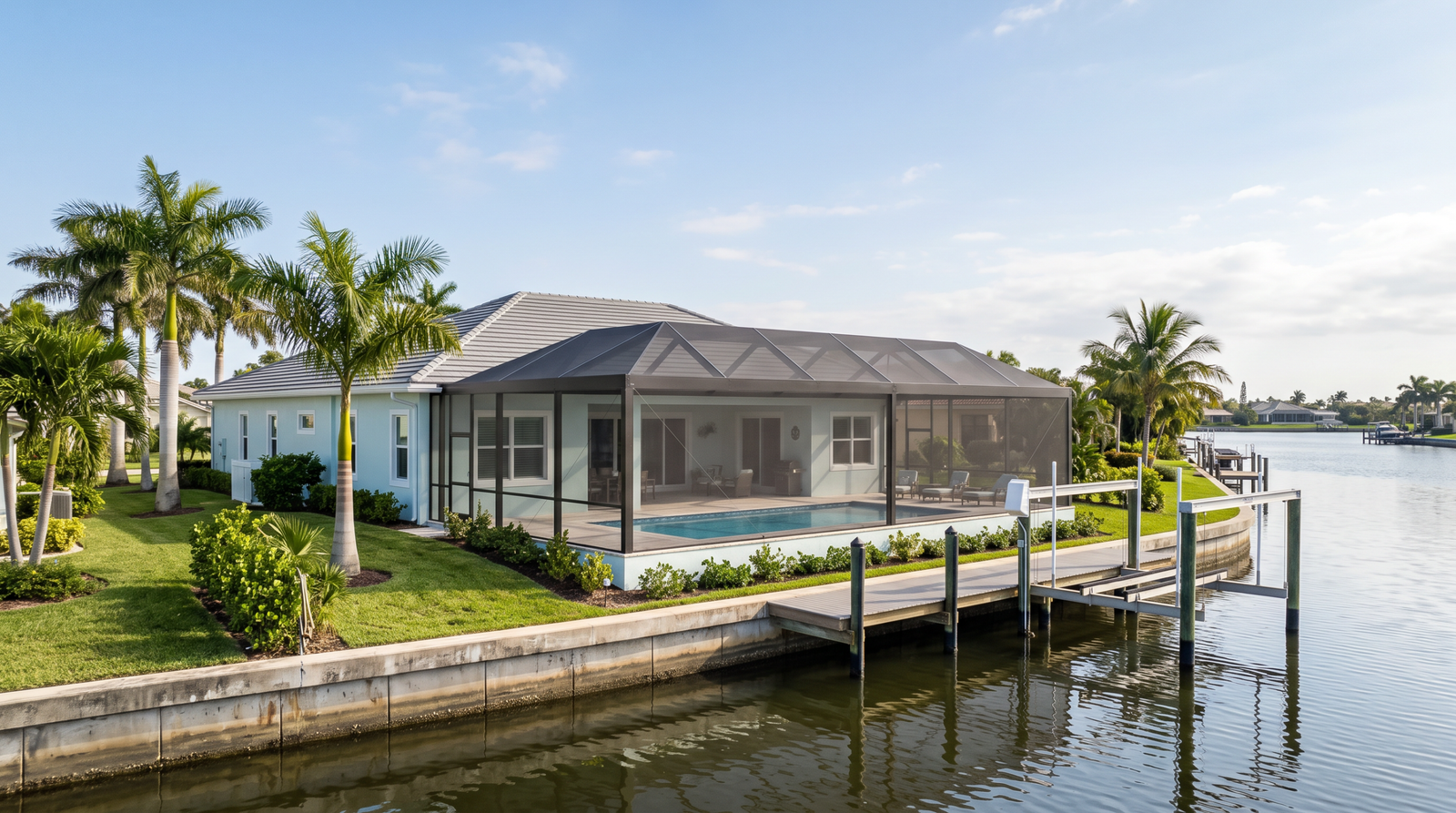
Marco Island Home: Pool Enclosure
The chalky, sun-faded frame was washed, deglossed and primed, then finished in a durable dark bronze.
 Before
 After
Signs It’s Time
- Color has faded from bronze or white to an uneven, washed-out tone
- A white powder comes off when you touch the frame (oxidation)
- Peeling or flaking, especially on top and sun-facing beams
- Mildew or algae staining that returns soon after washing
- You are re-screening and want the frame to match
Our Process
- Inspection: frame, fasteners and screens checked; any corrosion or damaged members noted.
- Protect: pool, deck, pavers, furniture and landscaping covered.
- Clean: dirt, mildew and loose oxidation washed off.
- Prep: chalky and peeling areas abraded; aluminum adhesion primer where needed.
- Coat: durable metal coating, usually bronze, white or black.
- Cleanup: covers removed and the area left ready to swim.
Choosing a color
Bronze is the most common in Southwest Florida and hides dirt well. White looks crisp but shows mildew sooner. Black is increasingly popular and makes the screen almost disappear from inside. Check whether your HOA requires approval.
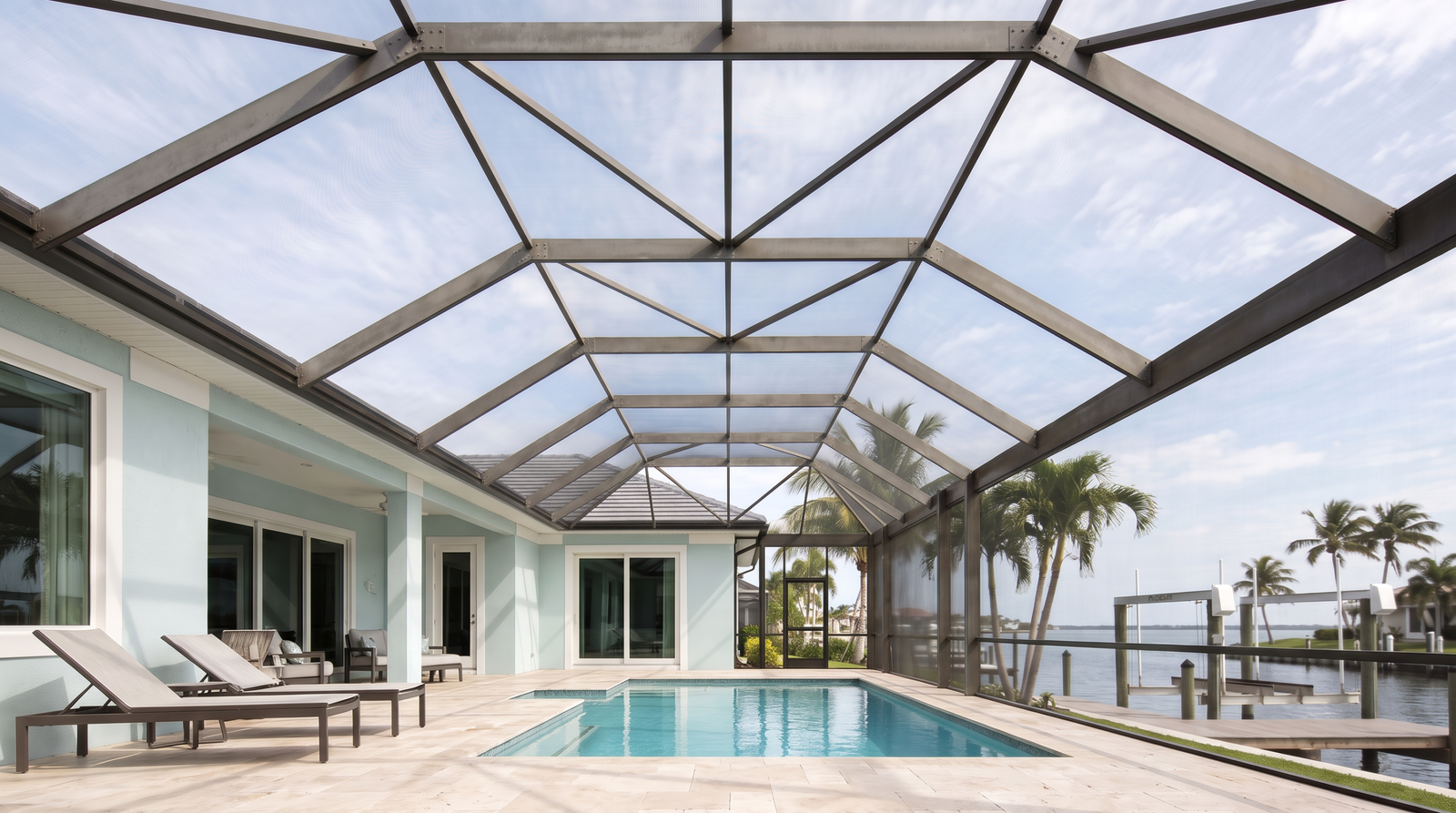
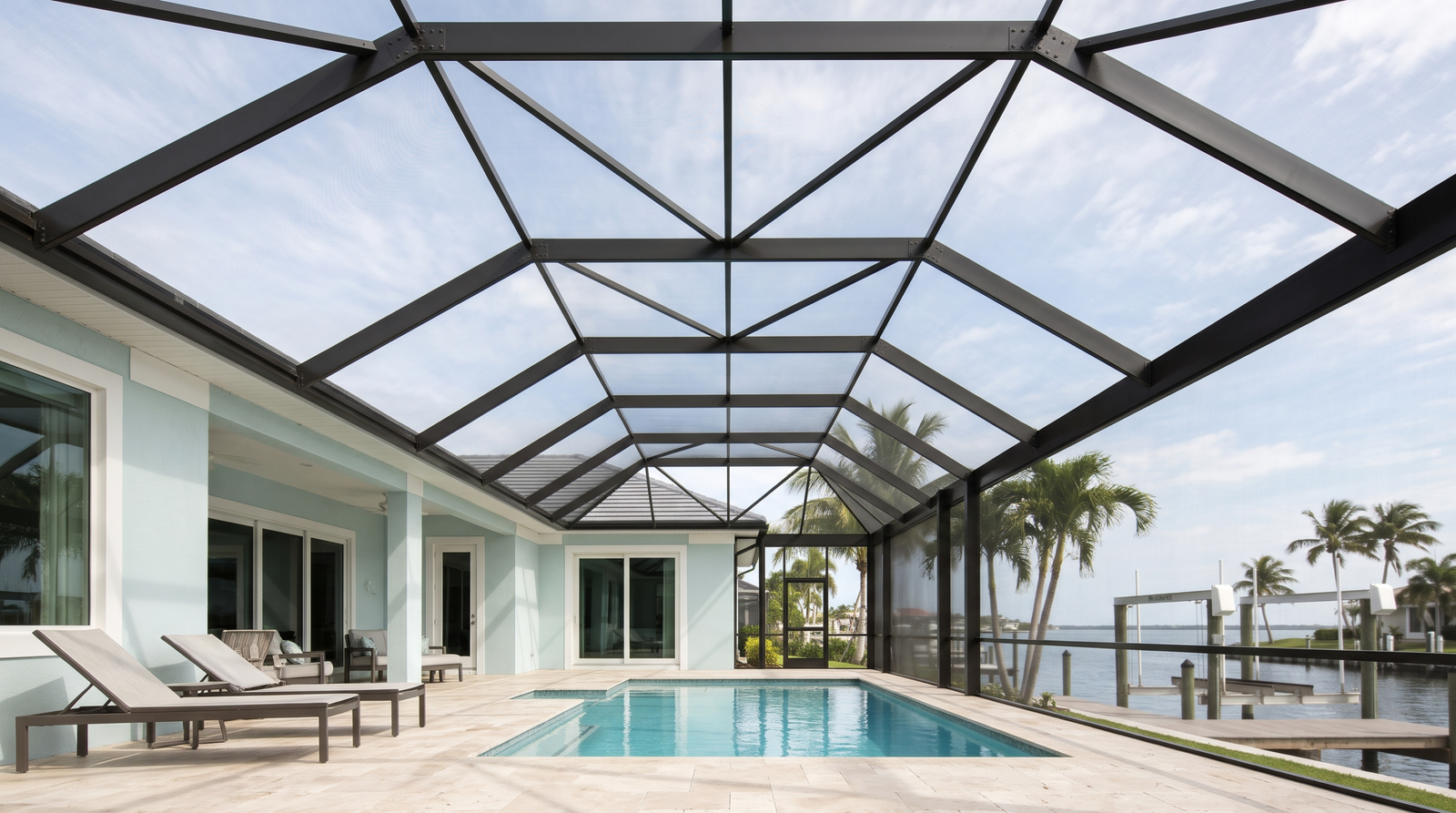
Marco Island Home: Under the Cage
Every overhead beam and purlin was hand-cleaned and coated, with screens and the pool deck masked and protected throughout.
 Before
 After
Why Naples Pool Cages Fade and Chalk
A pool cage sits outdoors with no shade of its own, so every part of the frame takes the full force of Southwest Florida weather. The factory finish on most aluminum enclosures is a baked powder coat or enamel. It looks great when new, but it was never meant to last forever in this climate.
- UV exposure: the top beams and the sides facing south and west get the most sun and fade first. That is why many cages look uneven, darker on the shaded side and washed out on top.
- Oxidation: as the finish breaks down, it turns into a fine chalky powder. Rain streaks that powder down the posts and onto the deck.
- Pool chemicals: chlorine and salt systems release vapor and splash that slowly attack the finish on lower members and kick plates.
- Salt air: canal and Gulf-front homes in Marco Island, Vanderbilt Beach, Port Royal and the Moorings see faster wear and more spotting around fasteners.
- Moisture and mildew: shaded corners and areas near landscaping stay damp and grow dark staining.
Once the finish is chalky, washing alone brings it back for only a short time. Pool cage painting in Naples gives the frame a fresh protective layer and a uniform color again.
Prep and Coatings Made for Aluminum
Aluminum is one of the hardest surfaces to paint well. It is smooth, non-porous and often covered with an oxidized layer that ordinary paint will not stick to. Paint applied straight over a chalky frame usually starts peeling within a short time. Our prep is built around getting a real bond:
- Thorough wash: every beam, purlin, post and kick plate is cleaned of dirt, mildew and loose chalk, then allowed to dry.
- Abrade: chalky, glossy and peeling areas are scuffed so the primer can grip.
- Spot repairs: loose paint is removed and any corrosion around fasteners is cleaned up and treated. If we find damaged members or a structural issue, we point it out so it can be fixed by the right trade before painting.
- Adhesion primer: a primer formulated for aluminum and non-ferrous metal goes on where the surface calls for it.
- Finish coats: a durable, UV-resistant exterior metal coating applied carefully to cover the tops, sides and undersides of each member evenly.
Masking is a big part of the job. The pool, deck, screens, furniture, lanai ceiling and nearby landscaping are protected throughout, and drips and overspray are controlled so the only thing that changes color is the frame.
HOA Approval, Timing and Gated Communities
Pool cages are visible from neighboring homes, golf courses and waterways, so many associations treat them like any other exterior color. Communities in Grey Oaks, Quail West, Mediterra, Pelican Bay, Lely Resort and Marco Island often require architectural review before changing an enclosure from bronze to black or white. Even same-color repaints sometimes need a notice to management. We provide the product and color details for your application and schedule once approval is in hand. Learn more on our HOA and communities pages.
Timing. The drier months offer the steadiest weather, but we paint enclosures year-round. In summer we start early and plan around afternoon storms so fresh coatings are not hit by rain. Many seasonal owners have the cage done while they are away so the pool area is ready when they arrive.
In gated communities we handle gate access, work-hour rules and parking, and keep equipment neat and out of the way of neighbors.
Cost Factors and Keeping It Looking New
What affects cost. Your free, on-site estimate comes as a written, itemized quote. The main factors are:
- Overall size and height of the enclosure, including mansard or dome styles.
- Number of beams, purlins and posts, and how much detail the design has.
- Condition of the existing finish and the amount of chalk, peeling or corrosion.
- Whether screens are staying in place or being replaced.
- Color change, especially going from bronze to white or the reverse.
- Access around the pool, landscaping and adjoining lanai.
Maintenance. Rinse the frame with fresh water from time to time, especially on waterfront homes, to remove salt and pool-chemical residue. Wash off mildew before it stains, keep sprinklers from soaking the same posts every day, and trim plants away from the screen walls. A little regular care keeps the color even and helps the new finish last longer.
Mistakes to avoid
The most common problems come from painting over chalk without cleaning and abrading, using a general-purpose paint instead of a metal coating, and rushing in humid conditions. These jobs tend to peel within a season or two and are harder to fix the second time. Rolling only the parts you can see from the ground also leaves the tops of beams to fail first.
As an owner-led, Nine-Time Best of Houzz company, we take the time to prep and coat every member properly. Combine your enclosure with lanai painting, pool deck coating or exterior painting for a complete outdoor refresh.
Paint, repair or replace?
Painting is the right answer when the frame is straight, the connections are solid and the problem is the finish: fading, chalk, light peeling and staining. If members are bent, badly corroded or the enclosure has storm damage, those issues need to be addressed by an enclosure contractor before any coating goes on, and in some cases replacement makes more sense. We look at the whole cage during your free estimate and tell you honestly which situation you are in. To get started with pool cage painting in Naples, call (239) 375-8737 or schedule an estimate.
Pool Cage FAQ
Is painting cheaper than replacing a pool cage?
In most cases, significantly. Painting makes sense when the frame is structurally sound and the problem is the finish.
Do the screens have to come off?
Not always. Many enclosures are painted with screens in place using careful masking. If you are re-screening anyway, paint first.
Can I use the pool during the job?
The pool is covered while we work. Most jobs take a few days.
Can a powder-coated cage be painted?
Yes. Once the oxidized surface is cleaned and abraded and the right adhesion primer is applied where needed, a quality metal coating bonds well over the old powder coat.
What color is best for a pool cage in Naples?
Bronze is the most common and hides dirt well. Black makes the screen almost disappear from inside. White looks crisp but needs more cleaning. Your HOA may limit the choices.
Will paint get on my screens?
We mask carefully and control overspray to keep paint off the screens. If you plan to re-screen, painting first is the cleanest approach.
Do you paint the kick plates and doors too?
Yes. Posts, kick plates, chair rails, doors and gutters on the enclosure are all included so the whole cage matches.
Do you do pool cage painting on Marco Island?
Yes. We paint pool cages from Naples to Marco Island, including canal and waterfront homes where salt air is a factor.
Marco Island Home: Side Wall & Kick Plate
Faded posts, chair rail and kick plate were cleaned, primed and refinished to match the rest of the cage.
 Before
 After
Get a Pool Cage Estimate
Naples office: 3003 Tamiami Trl N, Suite 317, Naples FL 34103
Schedule an EstimateCall (239) 375-8737Also see: Lanai Painting · Pool Deck Coating